
Blog
How to Reconstitute and Store Peptides: A Step-by-Step Lab Guide
Most problems with research peptides start at the bench, not in the vial. Learn how to pick the right solvent, mix without damaging the peptide, get your concentration exactly right and keep it stable.
Key takeaways
- Match the solvent to the job: bacteriostatic water for multi-use stocks, PBS for biological assays and cell work, and dilute acid or a little DMSO for peptides that won't dissolve.
- Be gentle. Let the vial warm to room temperature, add the liquid slowly down the glass wall, and swirl. Never shake.
- Concentration = mg of peptide ÷ mL of solvent. The calculator below does the maths for you.
- Cold and dark. Store powder at −20 °C. Keep solutions at 2–8 °C and use them within about a week, or split them into aliquots and freeze.
- Freeze once, thaw once. Repeated freeze–thaw cycles degrade peptides faster than almost anything else.
01Why peptides arrive as a powder
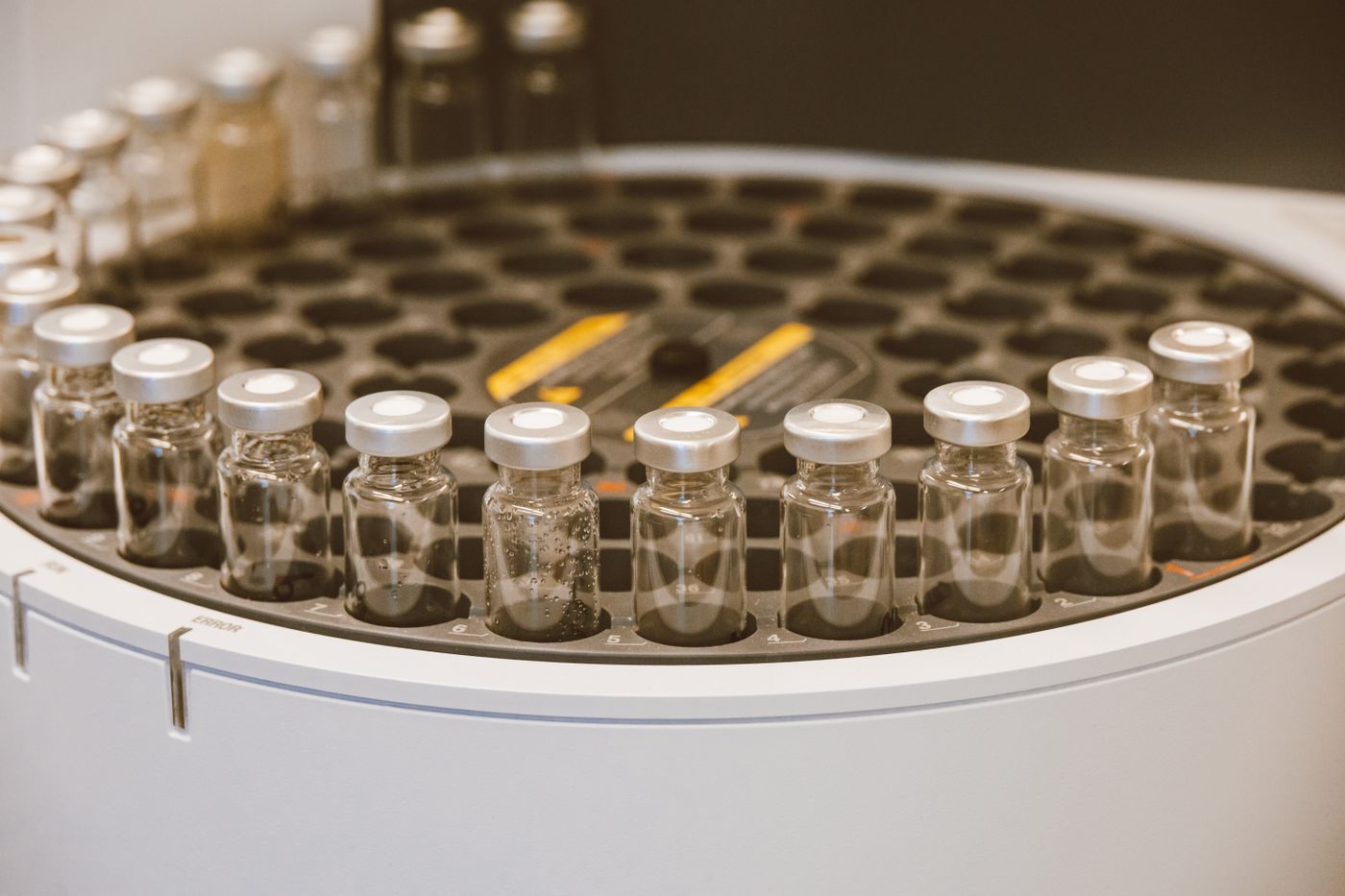
Research peptides are shipped lyophilised, or freeze-dried. Water is removed under vacuum at low temperature, leaving a dry "cake" or thin film at the bottom of the vial. Without water, the chemical reactions that break peptides down (hydrolysis, oxidation, deamidation) slow almost to a stop. That's why a sealed vial survives shipping, while the same peptide in solution would start degrading within days.
That's normal. A 5 mg peptide forms a very small cake, and sometimes just a film on the glass that you can barely see. Tap the vial gently on the bench before opening so any powder on the stopper falls to the bottom.
02What you need before you start
The peptide vial
Check the name, lot number and stated amount against your COA before opening.
The right solvent
Sterile and appropriate for your peptide and assay (see the next section).
Sterile syringes or pipettes
Calibrated tools so the volume you add is exact. The volume decides your concentration.
70% isopropyl alcohol
Swabs or spray for vial stoppers and your work surface.
Gloves and a clean area
Ideally a laminar-flow hood or biosafety cabinet for sterile work.
Labels and a marker
Record the compound, concentration, solvent, date and your initials.
03Bacteriostatic water vs PBS vs sterile water
The solvent is the most important decision in the whole process. It controls the solution's pH and salt content, whether it resists bacterial growth, and whether it will interfere with your assay.
| Solvent | What it is | Best for | Watch out for |
|---|---|---|---|
| Bacteriostatic water | Sterile water with 0.9% benzyl alcohol as a preservative | Stock solutions that will be drawn from several times | Benzyl alcohol can interfere with cell culture and some assays. Multi-dose vials are usually labelled to discard 28 days after first opening. |
| Phosphate-buffered saline (PBS) | Isotonic, buffered salt solution at about pH 7.4 | Cell-based and biological assays where physiological pH and salt matter | No preservative, so make the solution fresh, keep it cold and use it quickly. Phosphate can precipitate with some salts. |
| Sterile water | Pure sterile water, no additives | Single-use solutions you will use the same day | No buffer and no preservative. Don't store it for later. |
| Dilute acetic acid (e.g. 0.1–0.6%) | Weak acid solution | Basic (positively charged) peptides that resist water; some IGF variants | Check that your assay tolerates the acid. Dilute into buffer afterwards. |
| DMSO (small amount) | Organic solvent | Very hydrophobic peptides; dissolve first, then dilute dropwise into buffer | Avoid it for peptides containing cysteine or methionine. Watch the final DMSO percentage in cell work. |
Work out the net charge. Count +1 for each lysine (K), arginine (R) and the N-terminus, and −1 for each aspartate (D), glutamate (E) and the C-terminus. Positively charged (basic) peptides dissolve better in slightly acidic solutions; negatively charged (acidic) peptides dissolve better in slightly basic ones. Always test a small portion first before you commit the whole vial.
Need a ready-to-use buffer? Our Phosphate Buffered Saline (PBS) and PBS WA10 are made for exactly this step.
04How to reconstitute a peptide, step by step
Let the vial reach room temperature
Take the sealed vial out of the freezer or fridge and wait 15–20 minutes before opening it. Opening a cold vial pulls in humid air, and the moisture condenses on the powder.
Bring the powder down
Tap the vial gently on the bench, or spin it briefly in a centrifuge, so no powder is stuck to the stopper or walls.
Disinfect the stoppers
Wipe the rubber stoppers of both the peptide and the solvent vials with 70% isopropyl alcohol and let them air-dry.
Add the solvent slowly, down the side
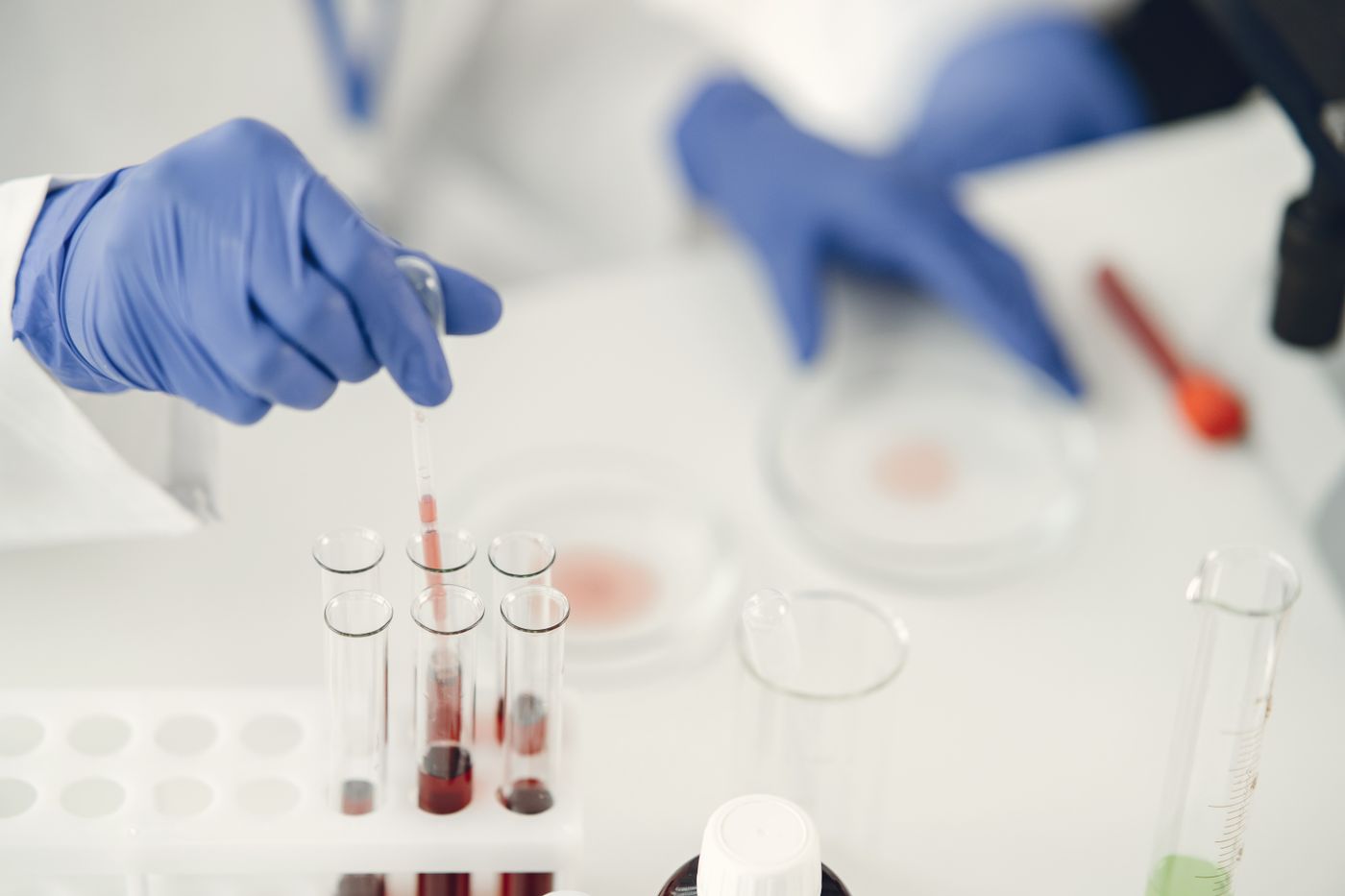
Measure the exact volume. Let it run down the inside wall of the vial instead of spraying it onto the cake. A forceful jet causes foaming and can damage the peptide.
Swirl, don't shake
Roll or swirl gently until the solution is clear. If it dissolves slowly, let it stand for 5–10 minutes and swirl again. Vigorous shaking causes foaming and can make peptides clump together (aggregate).
Inspect the solution
It should be clear and free of particles. Cloudiness, gel or flecks mean the peptide is suspended, not dissolved. See troubleshooting.
Label it, then aliquot or refrigerate
Write the compound, concentration, solvent, date and your initials. If you won't use it all within a few days, split it into single-use aliquots and freeze them straight away.
05Peptide reconstitution calculator
The maths is simple. Concentration (mg/mL) = peptide in the vial (mg) ÷ solvent added (mL). For example, 5 mg in 2 mL gives 2.5 mg/mL, which is the same as 2,500 µg/mL. Use the calculator to check your numbers, or to work backwards from the concentration you want.
Concentration calculator
Laboratory dilution maths for lyophilised peptide vials.
The amount on a label is usually the total powder weight. Part of that is counter-ions (such as acetate or TFA) and residual water, so the true peptide content is often 70–90%. For quantitative experiments, use the net peptide content from your certificate of analysis. Our guide to reading a COA explains where to find it.
06How to store peptides (before and after mixing)
Powder: −20 °C or colder
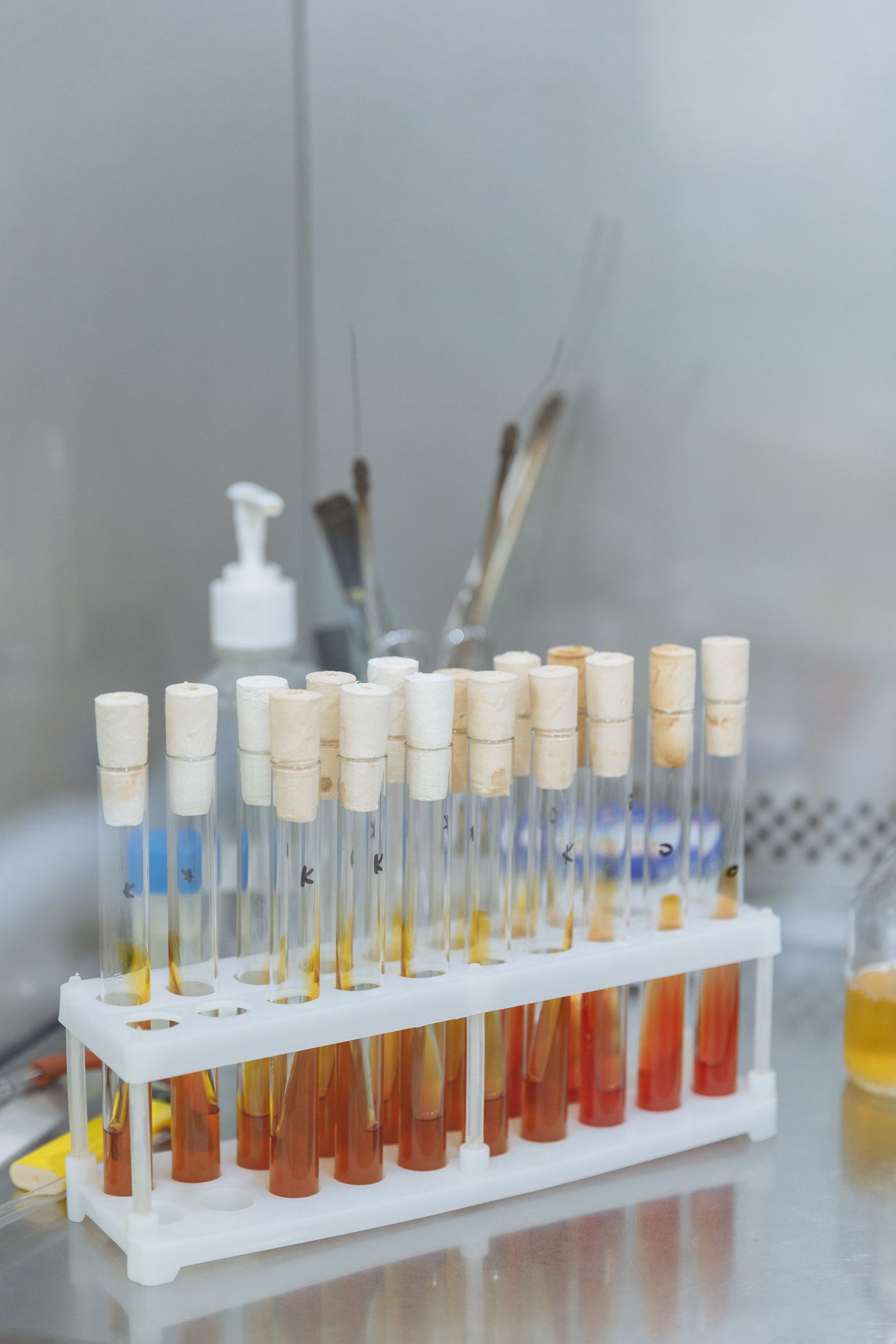
Store sealed lyophilised vials frozen, tightly capped, dry and dark. For the longest storage, −80 °C is better. Short periods at room temperature, such as shipping, are fine.
Solution: 2–8 °C, about a week
Most peptide solutions stay stable for up to about a week in the fridge. Solutions without a preservative (PBS, sterile water) should be used even sooner.
Longer: aliquot and freeze
Split the stock into single-use portions and freeze them at −20 °C or −80 °C. Thaw only what you need, once.
Five habits that protect your peptides
- Avoid repeated freeze–thaw. Each cycle damages the peptide. Aliquots solve this.
- Skip frost-free freezers. Their automatic defrost cycles warm samples up again and again.
- Protect sensitive sequences. Peptides containing cysteine (C), methionine (M) or tryptophan (W) oxidise in air. Purging the vial with nitrogen or argon helps.
- Mind the pH. Solutions above pH 8 should be frozen when not in use.
- Keep everything labelled and logged, so you always know how old a solution is.
07Common reconstitution mistakes
Shaking the vial
Causes foaming, shear stress and aggregation. Swirl gently instead.
Spraying onto the cake
Aim the solvent at the glass wall and let it flow down.
Using tap or bottled water
It isn't sterile and contains minerals. Always use a sterile laboratory solvent.
Opening a cold vial
Condensation adds moisture to unused powder and speeds up degradation.
Keeping PBS solutions for weeks
No preservative means a short shelf life. Use it within days or freeze aliquots.
Ignoring cloudiness
A cloudy solution isn't fully dissolved, so your concentration will be wrong.
08Troubleshooting
| Problem | Likely cause | What to try |
|---|---|---|
| Won't dissolve | Wrong solvent for the peptide's charge or hydrophobicity | Wait 10 minutes and swirl again, then try brief bath sonication. Then move to dilute acetic acid (basic peptides) or a little DMSO (hydrophobic peptides), testing a small portion first. |
| Cloudy or hazy | Peptide is suspended rather than dissolved, or is aggregating | Don't use it for quantitative work. Re-check the solvent choice and the pH. |
| Foam on top | Shaken, or solvent added too fast | Let it settle in the fridge, and add solvent more slowly next time. |
| Solution was fine, now has particles | Degradation, contamination or precipitation over time | Discard it. Make fresh stock and aliquot it this time. |
| Vacuum pulls the solvent in fast | Vials are often sealed under vacuum | Normal. Control the flow so the liquid still runs down the wall. |
Phosphate Buffered Saline (PBS)
Ready to useIsotonic buffer for reconstitution and assays.
View productPBS (WA10)
10 mLBuffered saline in a 10 mL vial.
View productResearch peptides
Full catalogueLyophilised, lot-numbered vials.
View productEverything you need on one bench
Lyophilised research peptides and matching buffers, packed to arrive stable and ready for reconstitution.
FAQFrequently asked questions
Can I use PBS instead of bacteriostatic water?
Yes, and for cell-based or biological assays PBS is often the better choice because benzyl alcohol can interfere with cells. The trade-off is that PBS has no preservative, so make the solution fresh, keep it cold and use it within days, or freeze aliquots.
How long do reconstituted peptides last?
As a general guide, most peptide solutions stay stable for up to about a week at 2–8 °C. Some sequences degrade faster. For longer storage, split the solution into single-use aliquots and freeze at −20 °C or −80 °C.
Should I shake the vial to dissolve the peptide?
No. Shaking causes foaming and shear forces that can make peptides aggregate. Swirl or roll the vial gently, and give it a few minutes if it dissolves slowly.
Why is my reconstituted peptide cloudy?
Cloudiness means the peptide is suspended, not dissolved, usually because the solvent doesn't suit the peptide's charge or hydrophobicity. Try the charge-based approach: dilute acid for basic peptides, slightly basic buffer for acidic ones, or a small amount of DMSO for hydrophobic ones. Test a small portion first.
How do I calculate peptide concentration?
Divide the amount of peptide (mg) by the volume of solvent (mL). 10 mg in 2 mL is 5 mg/mL, or 5,000 µg/mL. Use the calculator in this guide, and use net peptide content from the COA for exact work.
Can I refreeze a reconstituted peptide?
Freeze it once, as aliquots, and thaw each aliquot only once. Repeated freeze–thaw cycles are one of the main causes of peptide degradation.
REFSources
- Sigma-Aldrich (Merck). Handling and storage guidelines for peptides. sigmaaldrich.com
- Sigma-Aldrich (Merck). Peptide solubility guidelines. sigmaaldrich.com
- Manufacturer labelling for bacteriostatic water for injection (0.9% benzyl alcohol, multiple-dose vials): discard 28 days after first use.
Keep reading
We write plain-English guides to the peptide research literature and lab handling, and we cite primary sources so you can check every claim yourself.